Address
304 North Cardinal St.
Dorchester Center, MA 02124
Work Hours
Monday to Friday: 7AM - 7PM
Weekend: 10AM - 5PM

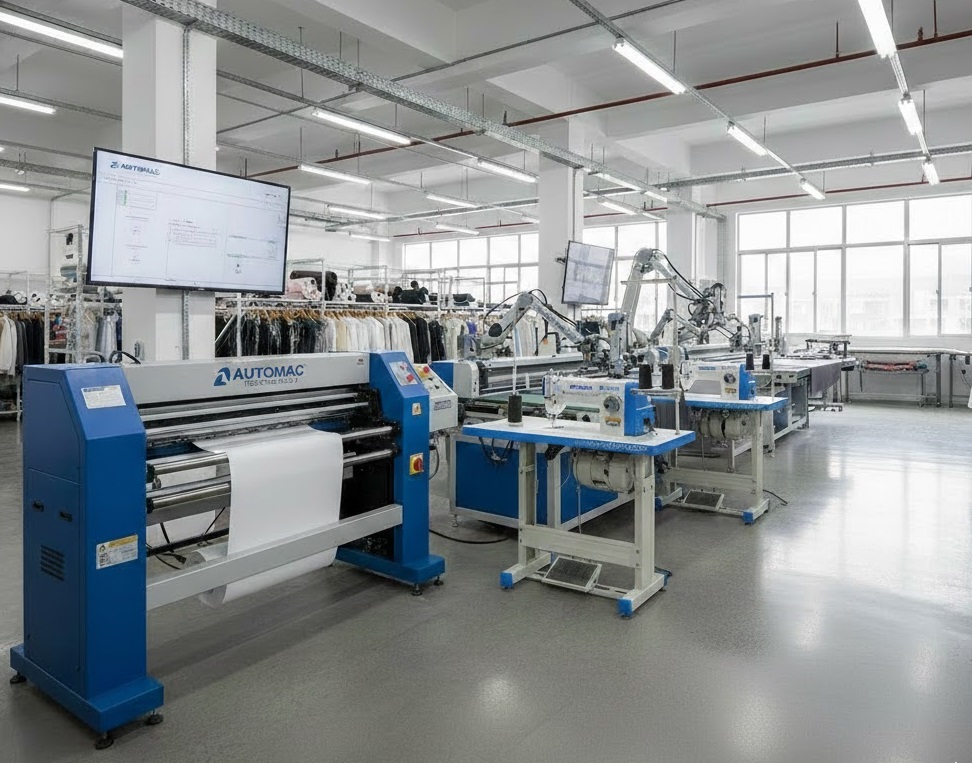
The global garments and apparel industry stands at the crossroads of innovation. Driven by fierce competition, rapidly changing fashion cycles, rising labor costs, and sustainability demands, modern apparel manufacturers are transforming their design and production processes in unprecedented ways. At the core of this transformation lies the adoption of Computer-Aided Design (CAD) and 3D digital design technologies — tools that are reshaping how garments are envisioned, developed, and delivered.
In this blog, we’ll explore:
Let’s begin.
At its simplest:
• CAD (Computer-Aided Design) refers to software tools that enable designers to create, edit, and manage pattern designs digitally instead of manually drafting on paper or fabric. It’s an evolution from hand-drawn sketches and manual pattern cutting to precise, scalable electronic design files.
• 3D design and visualization technologies allow apparel designers to create virtual garment prototypes, simulate how they look on virtual bodies/avatars, assess fit, and experiment with drape and material behavior — all without cutting into actual fabric.
These tools are no longer cutting-edge luxuries; they are essential, competitive assets for any company serious about cost efficiency, product quality, and speedy delivery.
a. Enormous Time Savings
In traditional garment development, pattern creation, sampling, and physical prototyping take time — often weeks. If a design requires modifications (which it almost always does), entire cycles of manual redrawing and remaking can extend lead times dramatically.
With CAD and 3D tools:
• Designers can make adjustments instantly on digital patterns.
• 3D simulations can replace early physical samples, so teams can make decisions faster.
• Sampling cycles — a major bottleneck — are compressed or eliminated entirely.
Faster turnaround means brands can respond swiftly to trends, meet retail deadlines, and reduce costly overtime or expedited shipping.
b. Precision and Accuracy
Human errors in manual pattern drafting — even small ones — can cause major problems down the line: ill fitting garments, wasted materials, and costly rework.
But CAD software:
• Ensures precise measurements and pattern grading for multiple sizes.
• Automatically calculates marker layouts for efficient fabric cutting.
• Maintains design consistency across collections even when styles vary.
When teams use CAD, they reduce fit errors and improve final product quality — making outcomes more predictable and reliable.
c. Enhanced Creativity and Visualization
While CAD streamlines accuracy, 3D design tools open new creative frontiers:
• Designers can experiment with colors, textures, prints, and silhouettes virtually.
• Brand teams can visualize garments in real environments or on avatars — without needing physical samples.
• 3D renderings can be used for marketing, digital showrooms, or e-commerce galleries.
This digital “try before you buy” capability is reshaping how fashion collections are planned and launched.
d. Sustainable and Cost-Effective Production
One of the most pressing challenges for apparel makers today is sustainability. Conventional sampling and physical design revisions result in material waste, extra labor, and environmental cost.
CAD + 3D design helps:
• Minimize fabric waste through optimized marker planning.
• Reduce energy and resource use by cutting down physical samples.
• Support eco-friendly processes by lowering the need for excess inventory and rework.
These gains not only improve the bottom line but also help brands align with sustainability commitments.
e. Improved Collaboration Between Teams
Today’s product creation needs diverse teams — designers, technical developers, merchandisers, factories, and supply chain partners — all working together.
Digital designs can be shared across systems and borders in real time:
• Design changes propagate instantly.
• Technical teams can review specifications without ambiguity.
• Factories can prepare production plans earlier with confidence.
This cross-functional collaboration is impossible with archaic manual workflows.
The typical garment workflow has transformed from linear and labor-intensive to interconnected and digital:
At every stage, digital tools replace manual touchpoints, enabling faster iterations, higher quality, and better cost control.
Now that we understand the “why” and “what” of CAD and 3D design in garments, let’s explore how AutoMac Technology Ltd. contributes strategically to this evolution.
Introducing AutoMac Technology Ltd.
AutoMac Technology Ltd. is a specialized apparel technology & automation solutions provider with a strong footprint in garment manufacturing technology. Founded in 2005 with operations in Bangladesh, China, and global markets, AutoMac focuses on bringing advanced CAD/CAM/CAS solutions, cutting room automation, and productivity-enhancing systems to apparel brands and manufacturers.
Their core offerings include:
• High-quality CAD design software (pattern, marker, cut-plan) systems.
• Fabric spreading and inspection machines that integrate with digital workflows.
• Automated cutting machines for precise, high-speed production.
• Lean productivity tools, SMV software, and digital consultancy services.
AutoMac bridges the gap between software tools and on-floor execution — a combination that many factories struggle to achieve independently.
How AutoMac Accelerates the Adoption of CAD & 3D
Let’s break down specific ways AutoMac strengthens digital capabilities in the apparel ecosystem:
a. End-to-End Digital Workflow Solutions
AutoMac doesn’t just deliver standalone CAD software — they help implement fully integrated digital solutions that tie design data into cutting room automation and floor operations.
Instead of treating CAD as an isolated tool, AutoMac ensures that:
• Design data flows directly into marker planning software.
• Cut plans are optimized for specific fabrics and machines.
• Automation systems receive accurate digital inputs.
This integration results in lower error rates and smoother transitions from design to production.
b. Cutting-Room Technological Advancements
AutoMac supplies advanced fabric spreaders, inspection equipment, and CNC auto cutters that work seamlessly with CAD data — eliminating manual bottlenecks common in traditional cutting rooms.
This means:
• Less manual handling of materials
• Higher cutting precision
• Lower material wastage
• Faster throughput
For mature and emerging factories alike, this delivers measurable ROI.
c. Training and Implementation Support
One of the key challenges to digital adoption is the skills gap — technicians and operators may not fully understand how to shift from manual to digital processes.
AutoMac addresses this by:
• Conducting factory audits
• Offering training and consultancy
• Helping tailor solutions based on factory layout and workflow needs
This human support is often the difference between technology deployment and true digital transformation.
d. Bespoke Solutions for Diverse Requirements
Not all apparel manufacturers are the same — knitwear, woven garments, denim, and leather products have unique challenges. AutoMac’s portfolio includes specialized solutions tailored for different fabric types and production needs.
How AutoMac’s Work Impacts the Broader Industry
AutoMac Technology’s solutions do more than just improve individual processes — they help the apparel industry achieve broader strategic goals:
The garments industry is already seeing widespread demand for CAD + 3D skilled professionals — from local factories hiring 3D designers to global brands investing in virtual design tools.
Factories that invest early in digitalization not only reduce costs and waste but also unlock higher margins and faster go-to-market strategies.
On the horizon:
• AI-driven fit and design optimization
• Cloud-based digital pattern sharing
• Digital supply ecosystem integrations
• Augmented reality (AR) showrooms
All of these build on the foundational technologies of CAD and 3D digital design.
Conclusion: Digital Design Is Not Optional — It’s Strategic
In today’s rapidly evolving fashion landscape, CAD and 3D design technologies are indispensable. They accelerate design cycles, improve product quality, lower costs, enhance collaboration, and support sustainability — all while helping apparel manufacturers remain competitive globally.
But technology alone isn’t enough. The real transformation happens when companies successfully integrate these tools into existing workflows, train teams, and adopt smart automation on the production floor.
This is where AutoMac Technology Ltd. becomes a strategic partner — helping factories and brands make the leap from legacy methods to digitally empowered operations through advanced CAD, automation solutions, and intelligent implementation support.
For apparel manufacturers looking to scale, innovate, and thrive in a digital future, adopting CAD and 3D design — together with the right partner like AutoMac — is not just beneficial; it’s essential.
